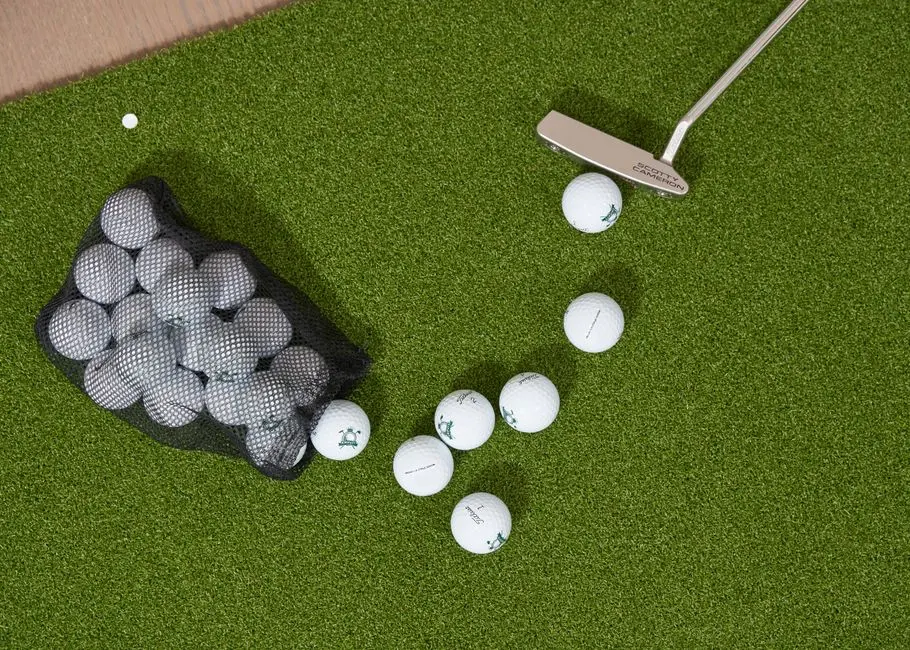
The first question is not "which ball is best" but "how many do I lose per round". If the answer is four, a five-euro premium ball means twenty euros in the trees. In that case buy a two-euro two-piece, or grade A lake balls, and you lose nothing but a bit of wedge spin.
If you lose none or one, performance is worth discussing. The gap between a two-piece and a tour ball shows most on wedges inside 80 metres: urethane gives around 9,000 rpm, ionomer 6,500 to 7,000. In practice, that decides whether the ball stops on the green or runs four metres past.
Off the driver the effect reverses. A tour ball spins more, which for a slicer amplifies side rotation — so the "better" ball can produce worse dispersion. A low-spin two-piece flies straighter and gives most amateurs more fairways.
Match compression to swing speed. Under 85 mph, look at 60 to 70 (Srixon Soft Feel, Callaway Supersoft). From 85 to 100 mph, 70 to 90 works (Chrome Soft, Pro V1). Above 100 mph you can go higher (Pro V1x, TP5x). Ignoring this costs three to five metres of carry.
The test we recommend: buy two different dozens and play nine holes with each, on the same day and the same course. Watch two things only — how many approach shots held the green, and how the ball behaved on putts. The difference is bigger than you expect, and it is the only test that accounts for your swing.
Colour is not purely cosmetic. Matte yellow is visible in grass about a third further away than white, which in autumn leaf litter means fewer lost balls and quicker rounds. Performance is identical; the colour is just a layer under the clear coat.
Last piece of advice: play one ball. Switching models between rounds makes it impossible to calibrate distances, particularly with wedges, where two models can easily differ by eight metres. Pick one, buy three dozen, and leave it alone for the season.